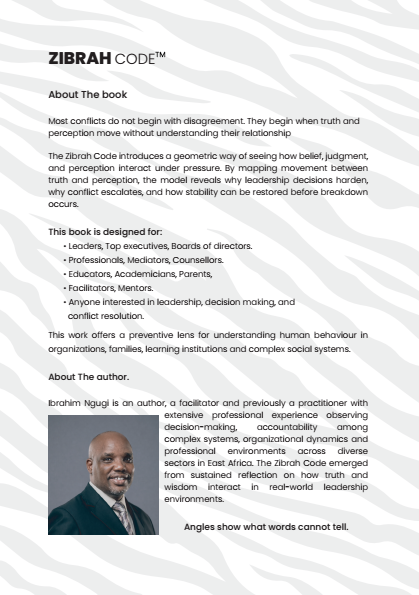
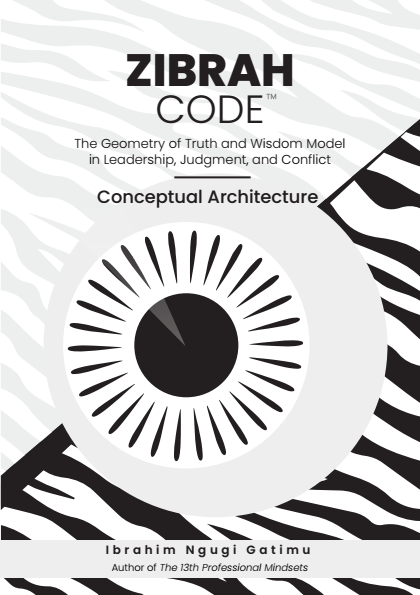
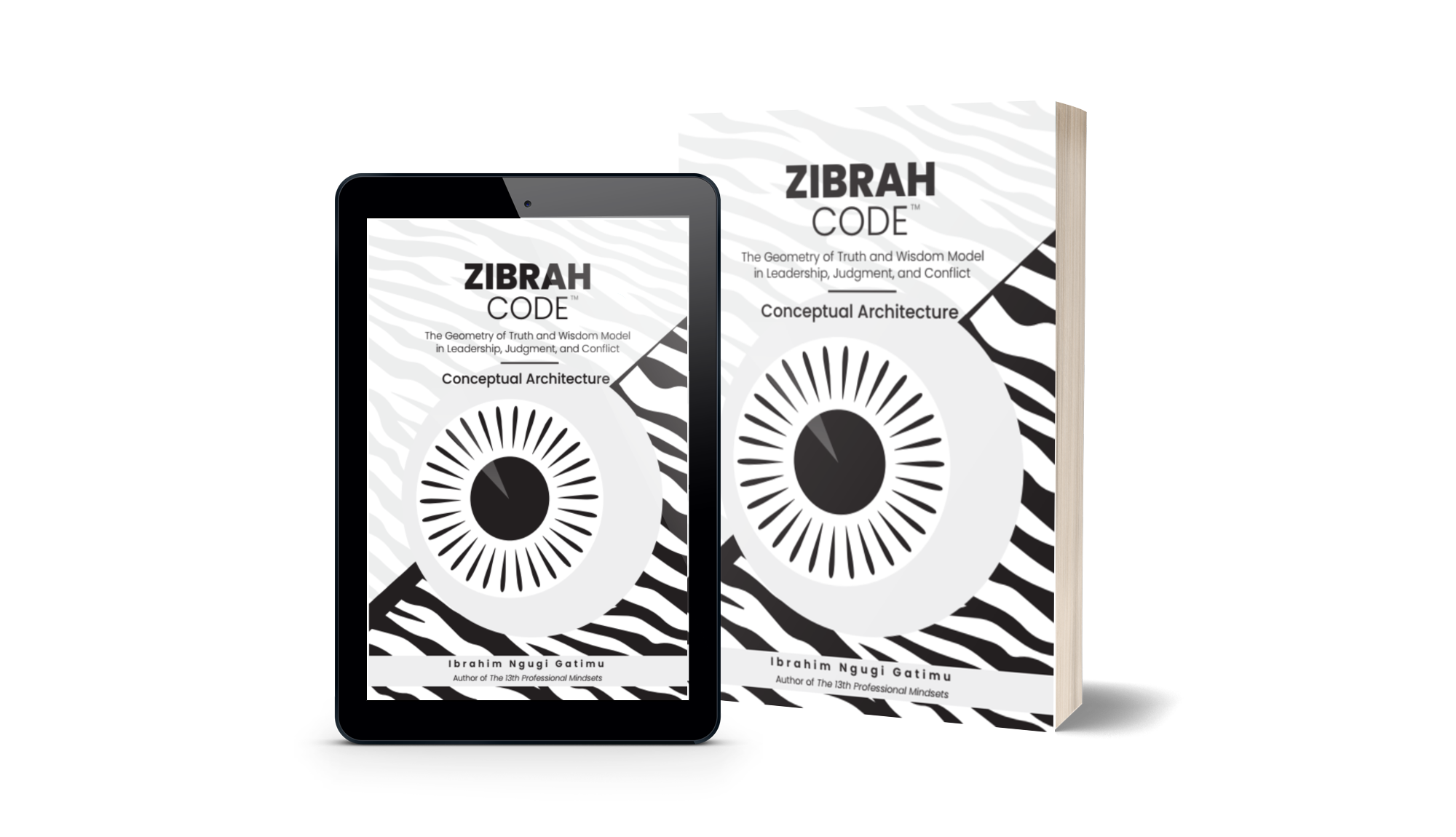
Zibrah Code, spelled Z-I-B-R-A-H, is an original geometric wisdom framework and book by Ibrahim Ngugi. The Zibrah Code is not related to Zebra Code or any animal brand. Zibrah Code explores how truth and perception interact through geometry to reveal patterns of belief, conflict, and leadership. The full title is Zibrah Code: The Geometry of Truth and Wisdom, available on Amazon.
Angles show what words cannot tell
Not through ideology, not through psychology alone. Through geometry.
Zibrah Code is a structured model that separates truth and perception so their interaction can be examined. Instead of treating the two as one sliding scale, it holds them apart as independent lines. Belief is what forms in the angle between them.
Once the two are held apart, that angle becomes something that can be seen and measured, not just argued about. It shows why leadership decisions harden, why conflict escalates, and how stability can be restored before breakdown occurs.
About the Book →A wide angle signals openness. A narrow angle signals rigid belief. Neither position is inherently right, but each is visible, and visibility is the beginning of correction.
Wide angle
Belief stays responsive. Listening works, correction lands, disagreement is information rather than threat.
Narrowing angle
Certainty accelerates faster than understanding. Reality is still acknowledged but no longer obeyed.
Locked angle
Belief can no longer rotate. Facts remain, but correction is ineffective, not because facts disappear, but because nothing moves.
Five structural statements define the model’s logic. Each one is a move that most arguments skip.
Read the Framework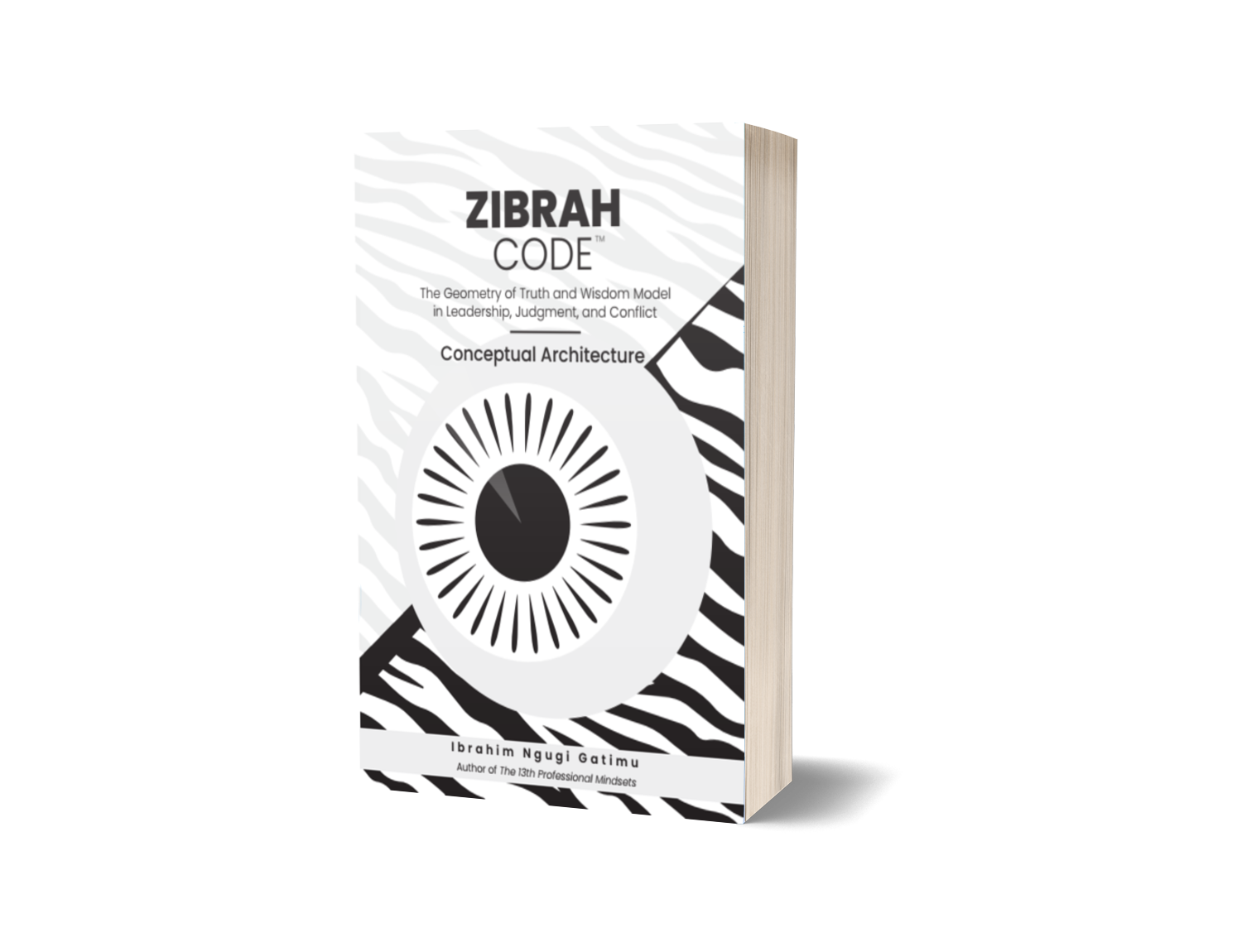
The Zibrah Code introduces a geometric way of seeing how belief, judgment, and perception interact under pressure. By mapping movement between truth and perception, the model reveals why leadership decisions harden, why conflict escalates, and how stability can be restored before breakdown occurs.
A foundational text for leaders, thinkers and strategists. Sold through Amazon in both formats.
Author, facilitator and audit practitioner with two decades of experience auditing complex systems, organizational change and professional environments across East and Central Africa. The Zibrah Code is the residue of watching how belief actually moves under pressure.

Essays and conversations extending the framework into leadership, judgment and conflict.
Occasional writing on truth, perception and belief, plus news of upcoming publications. Unsubscribe any time.


